
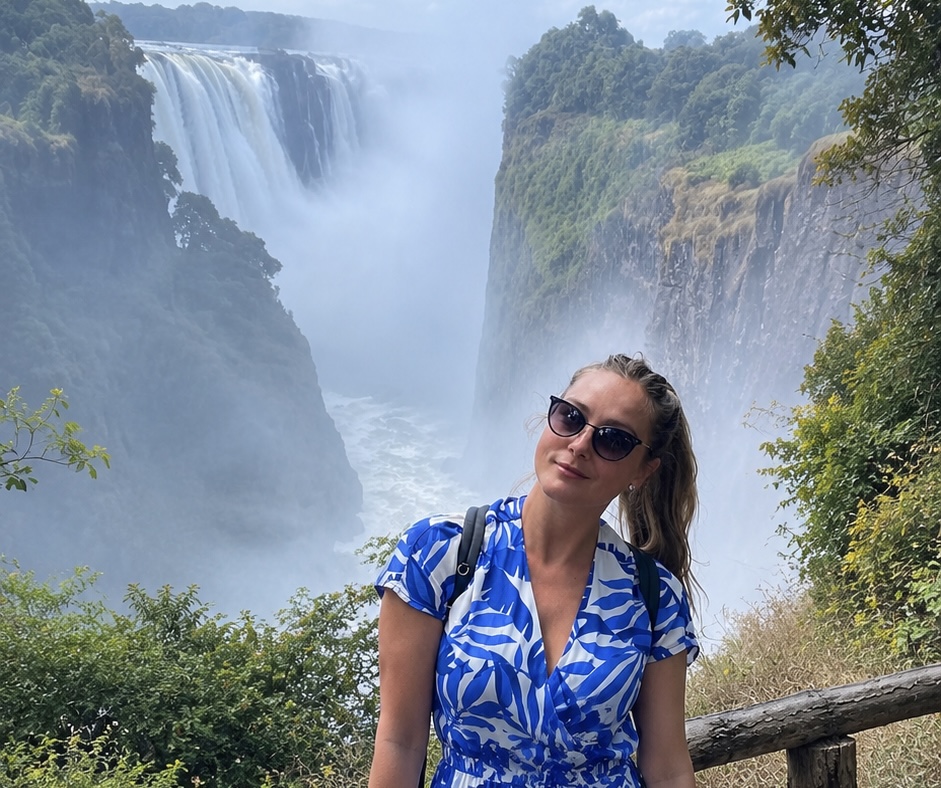

Some African traditions say waterfalls are where our world and the spirit world meet, creating a veil where spirits can cross
Over the years, it has hosted King George VI and Queen Elizabeth (on their 1947 royal tour), Princess Margaret, Queen Elizabeth the Queen Mother, and more recently, celebrities like Morgan Freeman and even statesmen like Nelson Mandela

Staff at the hotel greet guests with a smile

Built in 1904 for railway workers traveling the Cape-to-Cairo route, it quickly became a luxury escape for aristocrats, politicians, and explorers. Staying there is like stepping into an Edwardian novel
Victoria Falls is one of Africa’s most spellbinding wonders. It’s got it all — the thundering curtain of water known as Mosi-oa-Tunya (“The Smoke That Thunders”), a rainforest dripping with mystery, a legendary hotel that feels like stepping into another century, and cultural nights that leave you both amazed and a little spooked.
Your journey begins in Cape Town, where the flight whisks you across the continent to Victoria Falls Airport, the tiny gateway to Zimbabwe’s most otherworldly attraction.
I went to Victoria Falls for a weekend escape, and below are a few unforgettable highlights of the trip:
- Cape Town to Victoria Falls – Left South Africa behind on a morning flight and landed at Victoria Falls Airport. Stepping off the plane, I felt the air heavy with heat, carrying a faint spray in the distance — the misty veil that hinted at what was waiting for me.

Explorer David Livingstone named Victoria Falls after Queen Victoria in 1855 when he discovered them, but the local name Mosi-oa-Tunya still carries more power
The mists from Victoria Falls are visible from the hotel, which consistently wins accolades from Conde Nast Traveler, TripAdvisor Travelers’ Choice, and Virtuoso, cementing it as one of Africa’s finest historic hotels
- Victoria Falls Hotel – Checked into the grand Edwardian-style hotel built in 1904. It’s perched with a direct view of the gorge and the famous bridge. From my room, I could see the plume of mist rising day and night.
Vervet monkeys and baboons roam the gardens and sometimes even the verandas
Spotting certain creatures in the early light is considered a positive omen, a sign the day will unfold in your favor

In Shona traditions of Zimbabwe, powerful water spirits (njuzu, or mermaid-like beings) are believed to dwell in deep pools beneath waterfalls. They can bless or curse those who encounter them, often luring people in with songs or visions
- Every morning brought a sprawling buffet breakfast — eggs, fruit, pastries — all served with warm smiles and the distant roar of the Falls like a drumbeat. This hotel has hosted royalty and movie stars, but for me it was the view that stole the show.
When it comes to traditional Zimbabwean food, sadza takes center stage — a thick maize porridge served with just about everything


The head chef is a master of tradition, from nyama simmered in rich gravy to crispy kapenta fish from Lake Kariba. For the bold, there are mopane worms stewed with peanut butter and the famous roadrunner chicken, slow-cooked and full of flavor
Would you eat crocodile stir fry?

Zimbabwean food is hearty, earthy, and deeply tied to the land and traditions
There’s a well-known Shona saying: “Mangwanani ndeemangwana” (loosely: “The morning belongs to tomorrow”). It reflects the belief that rising early is tied to prosperity, good fortune, and respect for the day ahead
The gardens are alive with birdsong: colorful hornbills, kingfishers, sunbirds, and even the occasional fish eagle soaring overhead at breakfast

Around Victoria Falls, the first light of dawn mixes with the rising spray — locals sometimes describe it as the ancestors “breathing” through the mist. Some say if you catch the first rainbow of the day, it brings luck and clears away misfortune
Cape Town is about 3 hours south by plane, while Cairo lies nearly 7 hours north — Victoria Falls sitting like a thundering midpoint between the two
- The Falls Themselves – The world’s largest sheet of falling water. Over a mile wide. More than a hundred meters tall. At peak, 500 million liters of water crash down every single minute — like nature throwing a tantrum of biblical proportions. It’s a UNESCO World Heritage Site and one of the Seven Natural Wonders of the World, and honestly, standing there felt like stepping into a haunted cathedral made of stone and mist.
In many African traditions, waterfalls are seen as liminal spaces, where the physical world and the spiritual world touch


The Falls plunge into the Mosi-oa-Tunya National Park rainforest, a stretch of evergreen jungle that exists only because of the constant spray
Because waterfalls create lush rainforests and fertile ground, they’re linked with prosperity, growth, and fertility — both literal and symbolic
Waterfalls are often viewed as seats of divine energy
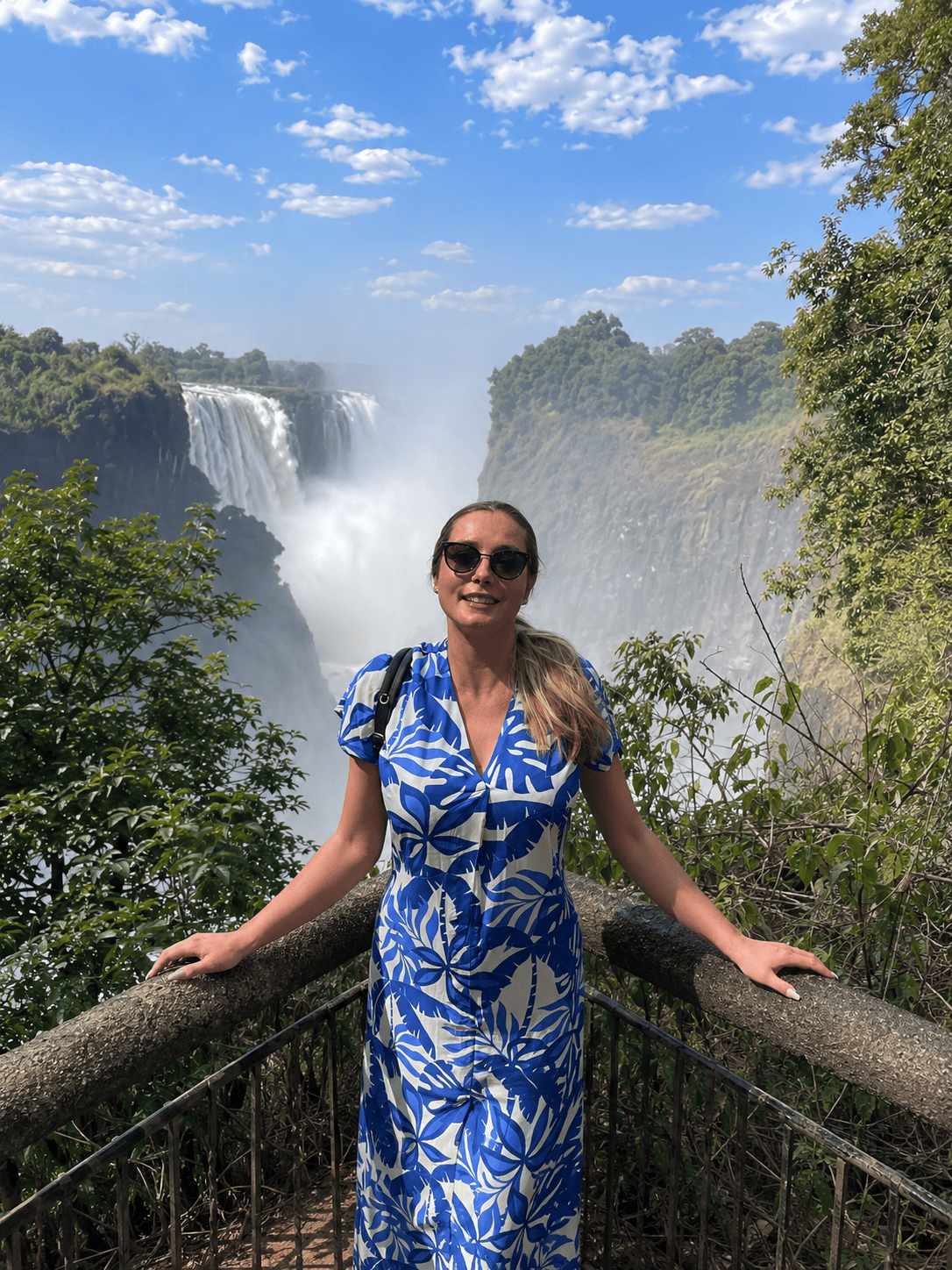
Many groups bring offerings of food, beads, or cloth to waterfalls, believing the ancestors or local gods dwell in the spray and mist

Locally called Mosi-oa-Tunya (“The Smoke That Thunders”), Victoria Falls is said to be home to Nyami Nyami, the serpent-like river god who guards the Zambezi. The mist is his breath, the thunder his voice — blessing or punishing with floods when angered

Roughly one million people visit the Falls each year

The trail runs for about 2 km through the rainforest, with 16 viewpoints where you can see the water from different angles

Bring a raincoat or poncho — the spray is no joke. Within minutes, you’ll be drenched
- Cultural Night at the Hotel – One evening, drums shook the ground as a band performed. Fire dancers spun torches, masks glowing in the flames. It was beautiful, but eerie too — the kind of performance that made you wonder if the fire was keeping something away… or calling it closer.

Evening the hotel

My bed
Makishi masquerade, a ritual performance practiced by communities across Zimbabwe and Zambia


The dancers — usually 15 or 20 in a troupe — wear elaborate masks and raffia costumes to represent spirits, ancestors, and animals from folktales
At first glance, the traditional performance at Victoria Falls Hotel can feel unsettling — drumming in the dark, masked figures leaping through firelight, costumes that look half-human, half-demon

One mask might resemble a trickster spirit, another a wise old ancestor, another a fierce creature like a hippopotamus
This dance is the acting out parts of the Mukanda initiation, a coming-of-age ceremony for boys


This is where boys leave the village, undergo tests of endurance and wisdom, and return as men. The masked dancers embody the spirits that guide — or sometimes frighten — them through that passage
Dinner at the hotel

- Lasting Impressions – Victoria Falls isn’t just a trip. It’s a force that stays with you. Long after you’ve left, you’ll still hear the roar, still feel the spray, and still wonder what else lives in the mist.
The hotel employs between 50 and 200 people

“May the Falls call in their magic from the spray.” It’s a poetic hope that the ever‑rising mist carries blessings—courage, renewal, protection—for those stepping away from that mist‑laden world
Tucked away in one of the elegant private lounges, there’s a striking portrait that often stops guests in their tracks. It’s King Lobengula, the last Ndebele monarch who ruled nearby land in the late 19th century

The hotel has undergone major refurbishment at least five times over its 115-year history, with a notable reconstruction in the late 1990s and early 2000s





Leave a Reply