
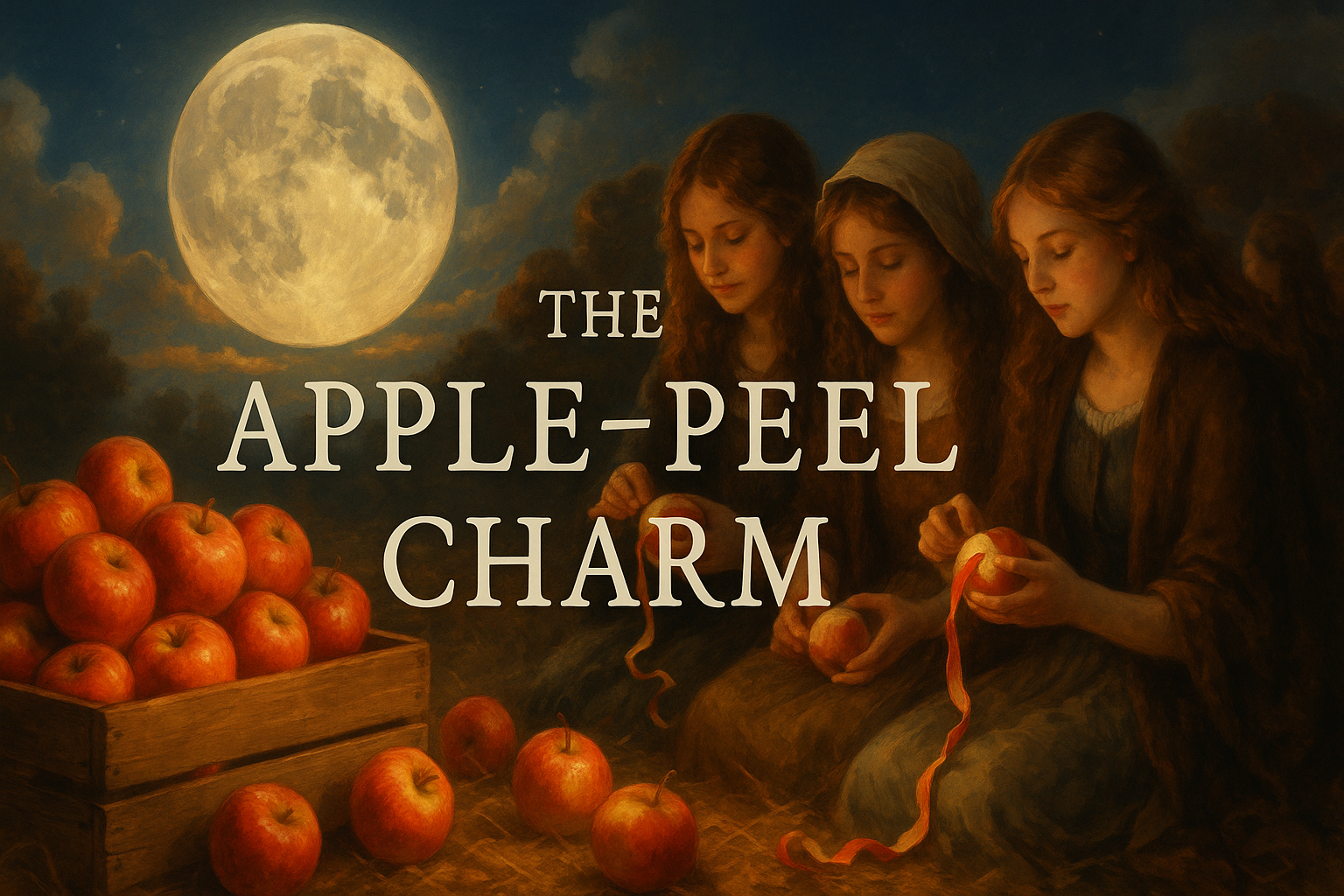
Apple-peel divination appeared in Victorian-era folklore collections

It began in the 1700s, mostly in Scotland, Ireland, and parts of England, and was tied to Samhain — using apple peels to reveal the initial of one’s future husband. It took root in America during the colonial period, carried over by British and Irish settlers who brought their folklore to the earliest colonies — from Plymouth and Jamestown to the New England countryside, Pennsylvania farmsteads, and along the Appalachian frontier. In these regions, where apples grew easily and harvest gatherings were central to community life, the charm found a new home.
Over time, it rippled outward through colonial kitchens, barn dances, and Thanksgiving tables, becoming a distinctly American love ritual in Massachusetts, New York, Pennsylvania, and Virginia, aligning with major colonial population centers. By the 1800s, it had become a staple of Halloween and harvest-time parlor games, recorded in period magazines and folklore collections.
Apples have long been linked to magic, fate, and fertility — symbols of love and the cycles of life. That’s why every autumn, especially on Thanksgiving, young girls would gather with baskets of apples to peel them and play the game beneath candlelight.
Subscribe for posts directly to your inbox!
How the Game Works
Take an apple and peel it from the stem up, keeping the peel in one unbroken strip. If it breaks, the reading will be false.
Once the apple is fully peeled, toss the peel over your left shoulder with your right hand, then lean close to see what shape it made on the ground. The shape is said to reveal the first letter of your true love’s name.
People still play it now — usually after cider, when the air smells of apples and firewood. Try it under the next full moon on December 4th to enhance the magic. Watch the curl closely when your peel hits the ground.
If it forms a letter you recognize….maybe your true love is listening.
Fun Fact
In early American households, girls often played the ‘Apple-Peel Charm’ during Thanksgiving week while the pies baked — turning kitchen scraps into prophecies.

t was typically undertaken by unmarried young women of “marriageable” age





Leave a Reply