
🧠 Early medicine • 🛠️ Surgical relics • 👁️ Mind & spirits • 🕯️ Gothic remedies

In early medicine, trephination was believed to release harmful spirits or ‘bad humors’ thought to be causing illness
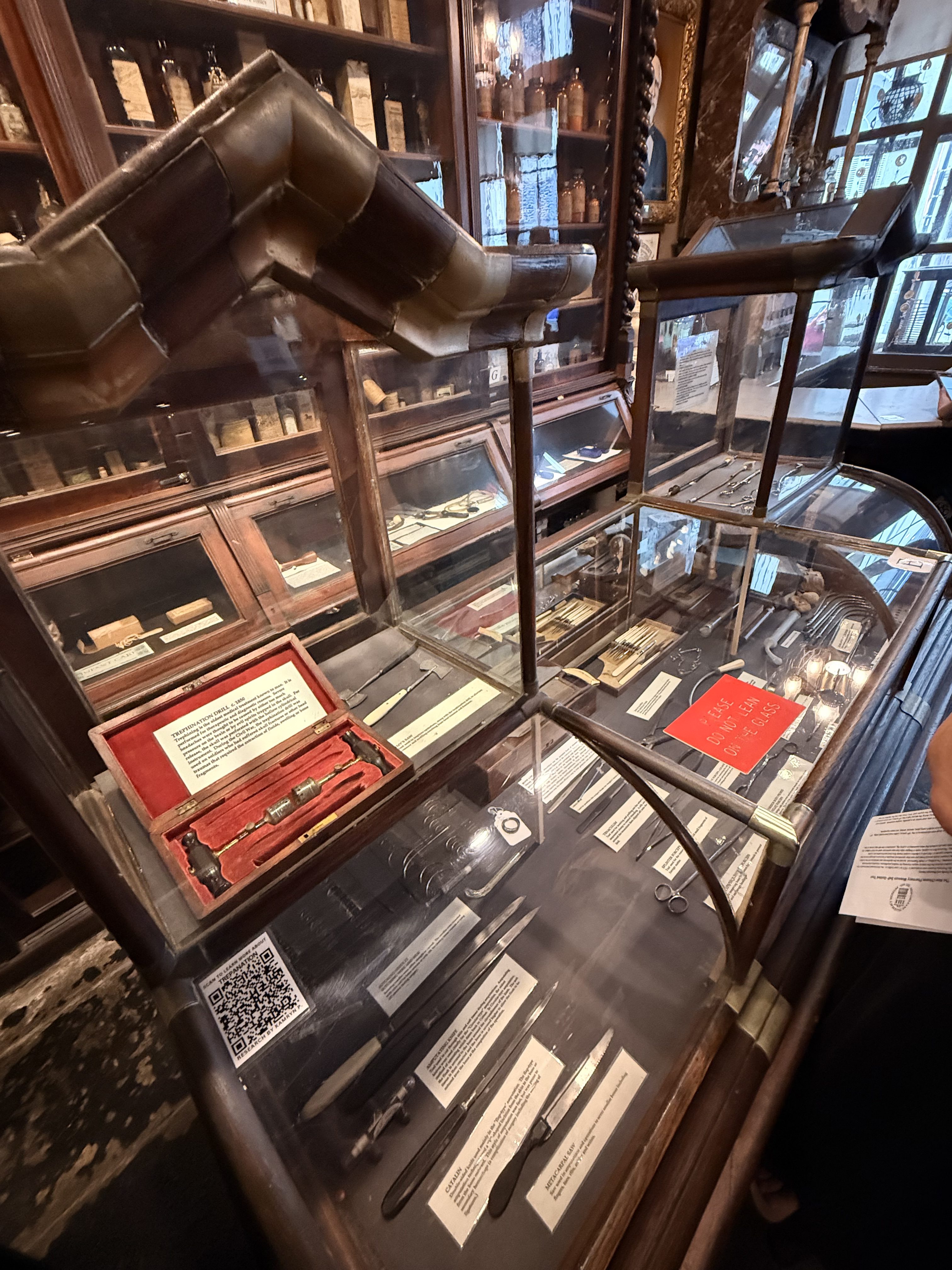
At the New Orleans Pharmacy Museum, I saw something called a trephination drill… a real medical tool used in the 18th and 19th centuries. Trephination involved drilling a small hole into the skull to relieve pressure after head injuries, treat seizures, or—earlier still—release what doctors believed were trapped ‘bad humors’ or spirits.
As unsettling as it looks, this wasn’t fringe medicine. It was a widely accepted surgical practice, and some patients actually survived and recovered. Surgeons worked without anesthesia as we know it today, relying instead on speed, alcohol, and sheer nerve. The drill’s hand-cranked design meant precision mattered—and mistakes were costly.
What makes it especially chilling is that trephination dates back thousands of years, appearing in ancient cultures across Europe, Africa, and the Americas. The version on display represents a moment when medicine was shifting from superstition toward science—but hadn’t fully left the shadows behind.
Read my blog post on the museum here.
Many patients who underwent trephination were already likely to die from head injuries, brain swelling, or seizures






Leave a Reply